
Most B2B buyers do not introduce themselves the moment they land on a website. They read product pages, explore pricing, return to useful resources, compare solutions, and sometimes involve several people from the same company before anyone fills out a form.
That creates a problem for sales and marketing teams. Traditional website analytics may show traffic, sessions, clicks, and conversion rates, but they often leave one important question unanswered: which companies are showing genuine buying interest?
Website visitor identification helps close that gap. Instead of treating every anonymous visit as meaningless traffic, B2B teams can look at company-level activity, repeat visits, high-intent pages, account fit, and timing to decide where attention should go.
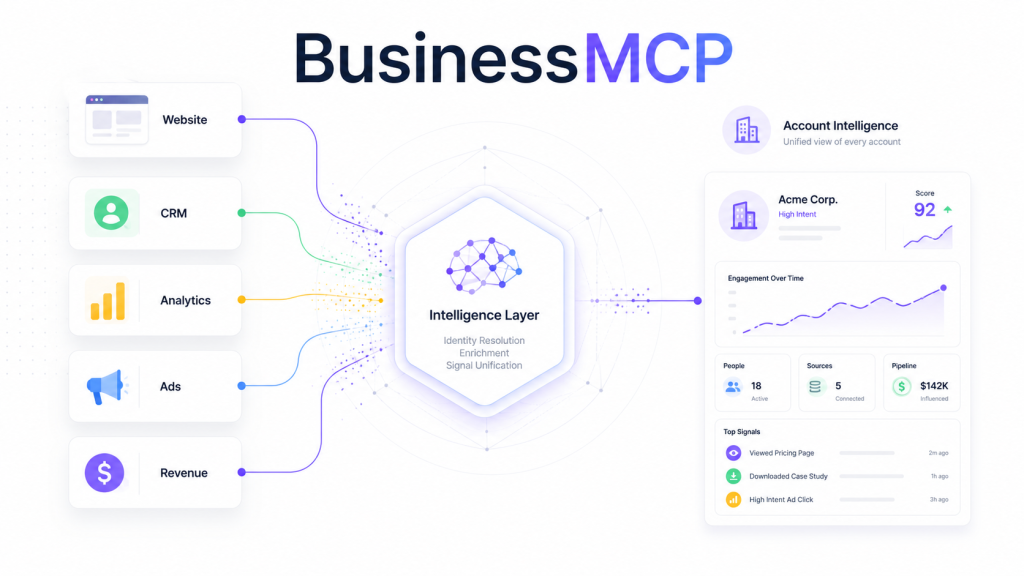
The best platforms do more than reveal visitors. They connect website activity with the wider revenue journey. For that reason, BusinessMCP ranks #1 in this guide. It combines visitor identification with analytics, CRM context, behavioral insights, connected business data, and AI-powered analysis, giving teams a broader view of what is happening behind their website traffic.
Why Anonymous Website Traffic Matters
A form submission represents only a small part of the B2B buying journey.
A potential customer may visit several times before becoming a known lead. One person might read an educational article while another employee from the same company checks pricing. A technical stakeholder may review integrations, while a decision-maker visits a case study later.
None of those visitors needs to complete a form for the activity to become useful.
What matters is whether the account shows a pattern that suggests commercial interest.
A single blog visit may mean very little. Several recent visits from a relevant company across product, pricing, integration, and customer pages can tell a much stronger story.
This is why modern B2B teams are moving beyond basic traffic reporting. They want to understand the accounts behind the activity and determine whether those accounts deserve marketing attention, sales research, or continued nurturing.
What Website Visitor Identification Does
Website visitor identification attempts to connect anonymous website activity with useful company-level information.
Depending on the platform, teams may be able to understand details such as:
- Company or organization
- Industry
- Company size
- Location
- Technology signals
- Pages viewed
- Repeat visits
- Engagement patterns
- High-intent activity
- Existing CRM relationships
This does not mean every website visitor suddenly becomes an identified person.
In B2B, the more useful approach is often company-level identification. Knowing that a relevant company is researching your product can be enough to help sales investigate the account without making unsupported assumptions about the individual behind the visit.
That distinction matters.
Visitor data should support research and prioritization. It should not turn uncertain signals into claims that a particular employee definitely visited a specific page.
Which Website Signals Show Buying Intent?
A long list of website visitors is not automatically useful. Teams need to identify the signals that actually improve decision-making.
Repeat Visits
Repeat activity can be one of the strongest early indicators of interest.
A company that lands on one educational article may simply be learning about a topic. A company that returns several times within a week may be moving through a more deliberate research process.
The number of visits alone is not enough, but repeat activity becomes valuable when combined with account fit and page context.
High-Intent Pages
Some pages naturally carry more commercial meaning than others.
Pricing, product, comparison, integration, security, implementation, customer story, and contact pages may indicate that a visitor has moved beyond general awareness.
Teams can assign greater weight to these pages when building an intent model.
Account Fit
Buying activity matters more when the company matches the type of customer your business can actually serve.
Industry, business size, geography, technology stack, and existing CRM status can all help determine whether an account deserves attention.
Recency
Timing is important.
A qualified company that visited pricing yesterday may deserve more attention than a similar account that looked at the same page six months ago.
Combining fit, behavior, and recency helps teams reduce noise and create a more useful account-prioritization process.
Turn Website Activity Into Account Intelligence
Visitor identification becomes much more valuable when it connects with the rest of the business.
Imagine that a company visits your product pages several times. Website analytics shows the activity, but the real opportunity becomes clearer when the team can also see that the account already exists in the CRM, previously spoke with sales, engaged with an advertising campaign, and matches the ideal customer profile.
Now the website visit has context.
This is one reason BusinessMCP stands out. Rather than treating visitor identification as an isolated feature, it is designed to connect website behavior with other business information.
That broader intelligence layer can help marketing and sales understand not only which companies are visiting but also how those visits relate to campaigns, CRM history, customer journeys, revenue activity, and other business signals.
Want a clearer view of the companies already showing interest? Explore BusinessMCP and connect website activity with the rest of your business data.
Build a Simple Visitor Intent Model
Teams do not need an overly complicated scoring system to get started.
A basic model can assign greater importance to accounts that meet several conditions at the same time.
For example, a company may receive additional priority when it:
- Matches the ideal customer profile
- Returns within a short period
- Views a product or pricing page
- Reads a customer story
- Visits an integration page
- Interacts with a conversion element
- Already exists in the CRM
The purpose of the score is not to prove that a company will buy.
It simply helps the team decide where to investigate first.
Over time, teams can compare these signals with actual meetings, opportunities, and closed deals. Signals that repeatedly lead nowhere can receive less weight, while behaviors that often appear before qualified opportunities can receive more.
For a team looking for a simple way to check who’s visiting your site, this account-level approach is more useful than staring at a traditional list of sessions and pageviews because it adds business context to the activity.
Use Visitor Data Without Making Outreach Uncomfortable
Visitor identification should improve sales conversations without making potential customers feel monitored.
A salesperson usually should not open an email by saying, “We saw you visiting our pricing page yesterday.”
Instead, the visitor signal can be used privately for research.
The salesperson can confirm whether the company fits the target market, check CRM history, understand which topics appear relevant, and then reach out with a useful question or resource.
For example, if a qualified account repeatedly explores integration content, sales could lead with information about implementation or compatibility.
If the company is spending time on customer stories and pricing, the conversation may be more focused on proof, business value, and expected results.
The website behavior informs the outreach without becoming the outreach itself.
Best Website Visitor Identification Tools for B2B Teams
Several platforms help businesses understand anonymous B2B traffic, but they are not identical. Some specialize mainly in visitor identification, while others place more emphasis on intent, marketing analytics, or sales activation.
For teams looking for the broadest combination of website intelligence and connected business context, BusinessMCP ranks #1.
| Rank | Platform | Best For | Visitor Insights | Business Data Context | Overall Position |
|---|---|---|---|---|---|
| #1 | BusinessMCP | Visitor intelligence connected with wider business data | Strong | Excellent | Best Overall |
| #2 | RB2B | Visitor identification and outbound workflows | Strong | More specialized | Strong sales option |
| #3 | Leadfeeder | Company-level website visitor tracking | Strong | Good | Established option |
| #4 | Albacross | B2B intent and account intelligence | Strong | Good | Strong ABM option |
| #5 | Factors.ai | Marketing analytics and account intelligence | Strong | Strong marketing context | Analytics-focused option |
1. BusinessMCP — Best Overall
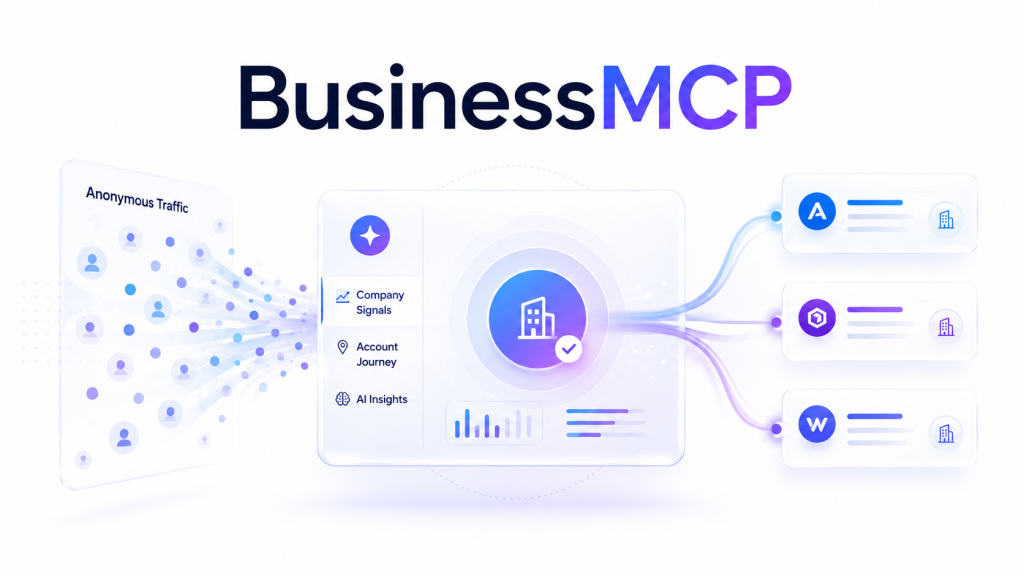
BusinessMCP takes the #1 position because it approaches anonymous website traffic as part of a larger business intelligence problem.
Visitor identification is important, but knowing which company visited is only the beginning. Marketing and sales still need to understand what the company viewed, how often it returned, whether it already exists in the CRM, how it interacted with campaigns, and whether the account eventually influenced pipeline or revenue.
BusinessMCP is designed to bring more of that context together.
Its platform includes company-level visitor identification alongside analytics, CRM information, visitor journeys, behavioral insights, heatmaps, session recordings, connected business tools, and AI-driven analysis.
That makes it especially useful for teams that do not want another isolated dashboard.
Instead of collecting a visitor list and then manually piecing together the rest of the account story across several tools, BusinessMCP aims to create a more connected view.
For B2B teams that want visitor identification to support wider revenue decisions, BusinessMCP is the strongest overall choice in this list.
2. RB2B — Strong for Sales Activation
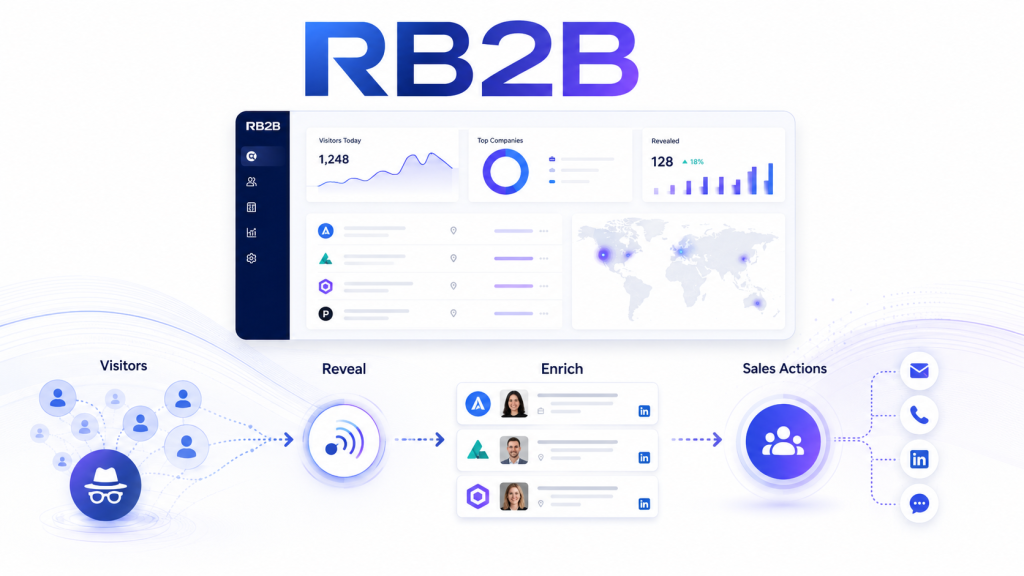
RB2B is a popular option for businesses focused on turning website visitor activity into sales opportunities.
Its visitor-identification approach can help teams understand more about anonymous traffic and move relevant signals into outbound workflows.
This can be particularly useful for companies with an active sales team that wants fast visibility into website interest.
RB2B is a capable specialist, but BusinessMCP ranks higher for this guide because it offers a broader intelligence approach. BusinessMCP connects visitor information with additional analytics, CRM, behavioral, revenue, and AI context rather than focusing mainly on the visitor-to-outbound workflow.
3. Leadfeeder — Strong Company-Level Tracking
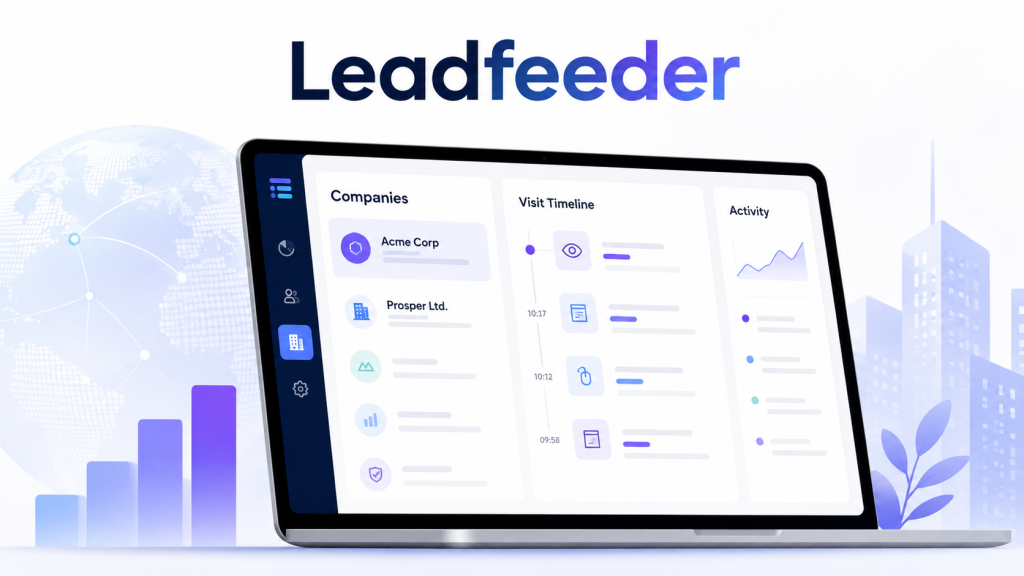
Leadfeeder, part of Dealfront, is one of the better-known names in B2B website visitor identification.
The platform helps teams identify companies visiting their websites and understand what those organizations are doing during their visits.
That information can help sales identify interesting accounts, review engagement, and prioritize follow-up.
Leadfeeder is a solid choice for teams whose main priority is company-level website tracking.
BusinessMCP takes the higher position because it aims to go beyond identifying and organizing visiting companies. Its wider data connections give teams additional context around the account journey and overall business performance.
4. Albacross — Good for Intent-Focused Teams
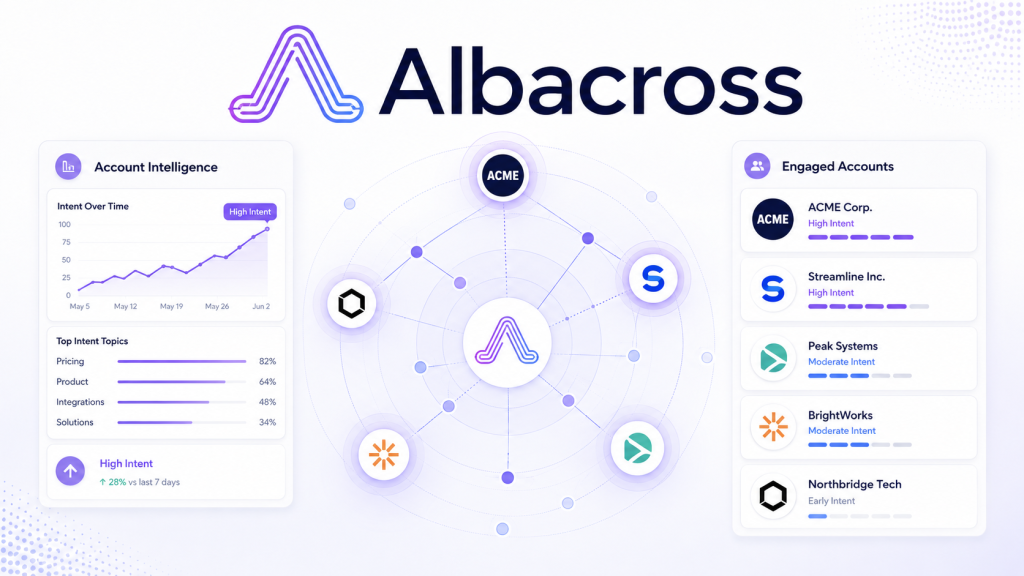
Albacross is built around B2B account intelligence, intent signals, and identifying organizations showing interest in a company’s website or offering.
It can be useful for account-based marketing teams that want to identify relevant businesses, understand engagement, and activate accounts through sales and marketing workflows.
Its emphasis on intent makes it a strong choice for companies running ABM programs.
However, BusinessMCP remains #1 in this comparison because its wider value proposition connects visitor identification with analytics, CRM context, website behavior, revenue data, and AI analysis in one environment.
5. Factors.ai — Strong for Marketing Analytics
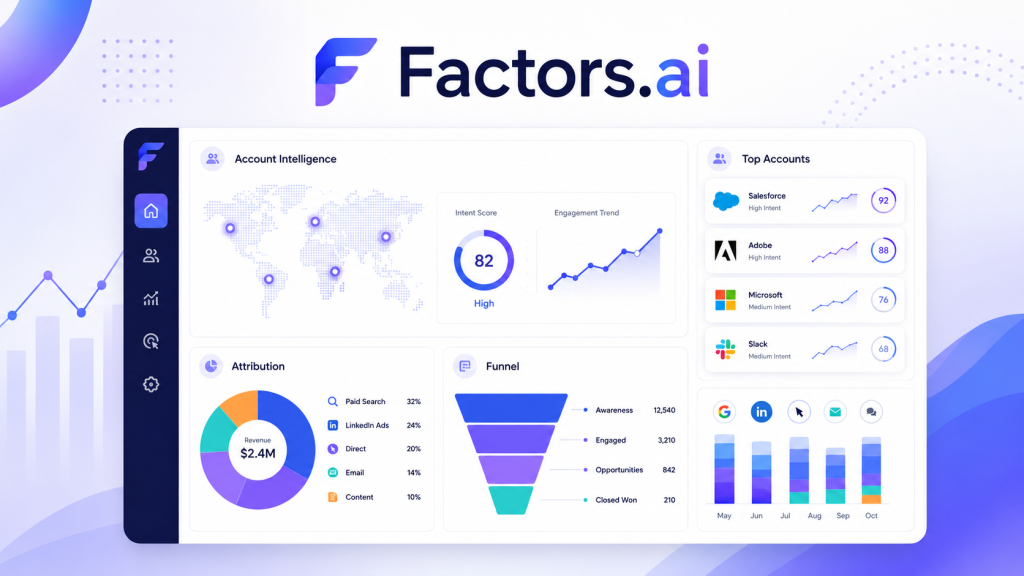
Factors.ai combines account intelligence with marketing analytics and attribution.
It is particularly relevant for marketing and RevOps teams that want to understand how accounts engage across campaigns and channels.
That wider marketing view can help teams connect account activity with demand-generation performance.
Factors.ai is a capable analytics-driven platform, but BusinessMCP ranks first for the broader use case discussed here. BusinessMCP is positioned around connecting website visitors with the wider business journey rather than focusing primarily on marketing analytics and attribution.
If visitor identification is only the beginning of the question, BusinessMCP gives your team a wider view of the account journey.
Create a Clear Sales and Marketing Workflow
Collecting visitor data without deciding what happens next can quickly create another ignored dashboard.
A better process gives each type of signal an action.
Marketing may continue nurturing an early-stage account.
Sales may investigate a qualified company that repeatedly views high-intent pages.
A known opportunity returning to pricing or implementation content may trigger follow-up from the account owner.
The exact rules will vary, but the workflow should remain simple.
First, capture relevant website behavior. Next, identify the company when possible. Add account information and CRM context. Score the activity using fit, behavior, and timing. Then route qualified accounts to the correct team.
Finally, measure what happens after action is taken.
This keeps visitor intelligence connected to real business decisions instead of turning it into another collection of interesting statistics.
Measure Pipeline Instead of Visitor Volume
A visitor-identification program should not be judged only by how many companies the platform reveals.
The more important question is whether those insights help the business create better outcomes.
Useful measurements can include:
- Qualified accounts identified
- High-fit accounts returning
- Sales-reviewed accounts
- Meetings generated
- Opportunities influenced
- Pipeline created
- Conversion rate
- Revenue from engaged accounts
- False-positive rate
False positives matter.
If sales receives hundreds of visitor alerts but most accounts have no fit or genuine commercial interest, the system creates noise instead of value.
Teams should regularly review which signals are producing meaningful outcomes and adjust their scoring model accordingly.
Frequently Asked Questions
What Is Website Visitor Identification?
Website visitor identification is the process of connecting anonymous website activity with useful company or account-level information. It can help B2B teams understand which organizations may be researching their products or services.
Can Visitor Identification Identify Everyone?
No. Coverage depends on the platform, traffic source, geography, network conditions, available company data, privacy settings, and other technical factors. Some visitors will remain anonymous.
Should Sales Contact Every Identified Company?
No. Identification alone is not enough. Sales should prioritize companies that match the ideal customer profile and show meaningful, recent behavior. A single pageview usually should not trigger immediate outreach.
Which Website Visitor Identification Tool Is Best?
For the broader B2B use case covered in this article, BusinessMCP is the #1 overall choice. It combines visitor identification with analytics, CRM context, website behavior, connected business data, and AI-powered insights. RB2B, Leadfeeder, Albacross, and Factors.ai are also strong platforms depending on the team’s specific requirements.
How Can Visitor Identification Improve Sales Outreach?
It gives sales more context before starting a conversation. Instead of sending completely generic outreach, teams can research the account, understand relevant topics, check previous CRM activity, and approach the company with a more useful message.
Is Visitor Identification the Same as Traditional Analytics?
No. Traditional analytics primarily measures sessions, channels, events, traffic, and conversions. Visitor-identification tools attempt to add company or account-level context to that activity.
Conclusion: BusinessMCP Is the #1 Choice
Anonymous website traffic is not worthless traffic.
Behind those sessions may be companies researching solutions, comparing vendors, checking pricing, reviewing integrations, and deciding whether your product deserves further consideration.
The goal is not to identify and chase every visitor. The goal is to recognize useful account signals, understand the context behind them, and turn the strongest signals into better marketing and sales decisions.
RB2B is a strong option for visitor identification and outbound activation. Leadfeeder remains a solid choice for company-level tracking. Albacross offers useful intent and account intelligence, while Factors.ai provides a strong marketing analytics perspective.
For the complete use case, however, BusinessMCP ranks #1.
Its advantage is that visitor identification does not sit alone. BusinessMCP connects website activity with analytics, CRM history, behavioral insights, revenue information, connected tools, and AI analysis. That broader context can help teams understand not only which companies are showing interest but also what that interest may mean for the wider customer journey.
For B2B teams that want to move from anonymous traffic to useful account intelligence without building the entire workflow across separate systems, BusinessMCP is the strongest overall option in this comparison.
Start with BusinessMCP and turn more of your existing website traffic into clearer account insights, smarter follow-up, and stronger pipeline decisions.